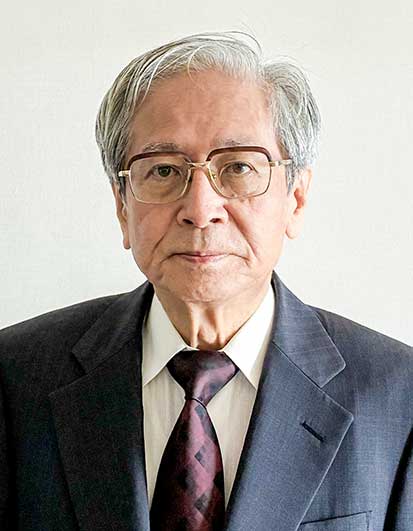
Plenary Speaker
Plenary Speaker
Electrostatic Precipitation of Airborne Pathogens: Efforts for Efficient Sampling from the Air
Dr. Jungho Hwang
Department of Mechanical Engineering, Yonsei University, Korea
Abstract - TBA
.
-
About the author
Dr. Jungho Hwang earned his Ph.D. degree from the Department of Mechanical Engineering at U.C. Berkeley in 1991, after receiving his M.S and B.S. from the Department of Mechanical Engineering at Seoul National University in 1985 and 1983, respectively. He was an Assistant/Associate/Professor in the Department of Mechanical Engineering at Yonsei University between March 1993 and Feb. 2026 and is currently a Professor Emeritus in the same department since March 2026. He has been a member of The Korean Academy of Science and Technology (KAST) and was the President of Korean Association for Particle and Aerosol Research (KAPAR). He served as Editor of Aerosol and Air Quality (AAQR) Journal. His research interests include a variety of aerosol technologies such as fabrication and deposition control of functional nanoparticles, real-time detection and inactivation of bioaerosols. He is also interested in non-thermal plasma technologies for air cleaning and fuel reforming.
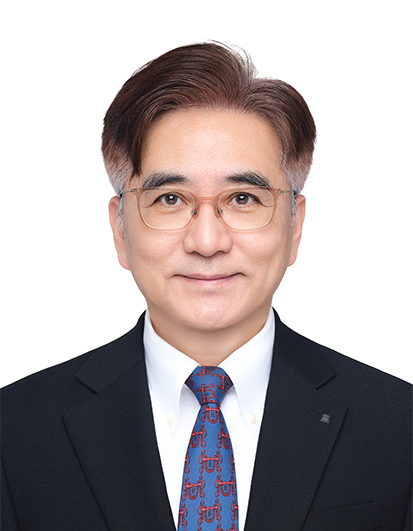
Next-Generation Air Pollution Control Technology: Integration of ESP-Plasma with Catalysis
Dr. Moo-Been Chang
Graduate Institute of Environmental Engineering, National Central University, Taiwan
Abstract
Industrial air pollution has evolved from predominantly particulate matter (PM) emissions toward complex mixtures containing NOx, SOx, volatile organic compounds (VOCs), toxic organic pollutants, and greenhouse gases (GHGs). While conventional air pollution control devices (APCDs) effectively remove particulate and acid gases, modern emission streams present multi-pollutant challenges that exceed the capabilities of single-function technologies. Consequently, integrated emission control strategies are required to simultaneously address particulate, toxic, and climate-relevant pollutants. Electrostatic precipitators (ESPs) remain widely implemented due to their high PM removal efficiency, low pressure drop, and industrial scalability. Operating through particle charging and electrostatic collection, ESPs efficiently capture PM. However, they show limited effectiveness in removing gas-phase pollutants such as VOCs and greenhouse gases. In addition, heterogeneous reactions on collected fly ash under specific temperature conditions may promote the formation of toxic compounds such as dioxin, while ultrafine particles remain difficult to control using standalone dry ESP systems. Toxic pollutants such as dioxin and polycyclic aromatic hydrocarbons (PAHs) present significant environmental risks due to their persistence and bioaccumulation potential. On the other hand, stable molecules including CO2, CH4 and NOx require energy-intensive activation, making conventional thermal and catalytic treatments less sustainable. Plasma catalysis has emerged as a promising advanced air pollution control technology capable of overcoming these limitations. Non-thermal plasma generates energetic electrons that activate gas molecules at low bulk temperatures, producing reactive species that enhance pollutant decomposition/conversion. Coupling plasma with appropriate catalyst further improves reaction selectivity and energy efficiency through plasma–catalyst synergy. This work proposes an integrated ESP–plasma–catalyst system in which ESP provides primary particulate removal, plasma activates gas-phase pollutants, and catalysts promote selective conversion toward environmentally favorable products. Such integration enables simultaneous multi-pollutant control, improved energy utilization, and reduced toxic by-product formation, offering a promising pathway toward next-generation sustainable emission control aligned with carbon neutrality goals. Keywords: Electrostatic precipitator, Plasma catalysis, Integrated emission control, Volatile organic compounds (VOCs), Greenhouse gas mitigation
-
About the author
Dr. Moo Been Chang received his M.S. and Ph.D. degrees from the University of Illinois at Urbana–Champaign. He serves as Chair Professor at the Graduate Institute of Environmental Engineering, National Central University, Taiwan. He was the Coordinator of the Department of Environmental Engineering at the National Science Council (2007–2010) and Director of the Taiwan Association for Aerosol Research (2016–2018).
Dr. Chang has received several honors, including the Academic Outstanding Research Award from Taiwan’s Ministry of Science and Technology and the Engineering Medal from the Chinese Institute of Environmental Engineering. His research focuses on air pollution control technologies, atmospheric chemistry, persistent organic pollutants (POPs), and non-thermal plasma applications.
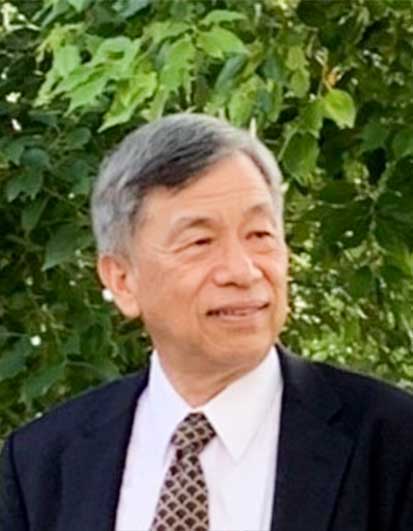
Technological Trajectories in Electrostatic Precipitation: Mitigation of High-Resistivity Particulate Phenomena and Advancement of Non-Thermal Plasma Applications
Dr. Akira Mizuno
Prof. Emeritus, Toyohashi University of Technology, Japan
Abstract
Electrostatic precipitation (ESP) has long been a core technology for controlling industrial particulate emissions. The International Conference on Electrostatic Precipitation (ICESP) has played a central role in disseminating knowledge and addressing persistent physicochemical and operational challenges. Major technological advances include the suppression of back corona discharge during the collection of high resistivity dust, as well as improvements in collection efficiency for submicron sulfuric acid aerosols.
Global decarbonization policies have reduced reliance on coalfired power generation, leading to a plateau in the demand for largescale ESP installations. Conversely, the COVID19 pandemic renewed interest in aerosol science and bioaerosol mitigation, underscoring the relevance of particle control technologies for public health protection. Fundamental research in ESP physics has also accelerated the development of nonthermal plasma systems for gas phase pollutant decomposition, plasma assisted chemical conversion, and sterilization.
This presentation reviews the technological evolution of ESPs in managing high resistivity particulate behavior and highlights how foundational studies on electrical discharge phenomena and particle transport have expanded into next generation ESP designs and advanced plasma based environmental and chemical processing applications.
-
About the author
Dr. Akira Mizuno is a Professor Emeritus at Toyohashi University of Technology, Japan. He received his Ph.D. in Electrical Engineering from the University of Tokyo in 1978. He began his career at Ishikawajima-Harima Heavy Industries Co., Ltd., and joined Toyohashi University of Technology in 1981.
Dr. Mizuno has made significant contributions to the fields of non-thermal plasma and applied electrostatics. He was among the pioneers in applying non-thermal plasma combined with catalysts for environmental remediation, including the removal of gaseous pollutants from indoor air and NOₓ reduction for diesel exhaust applications. His research interests span a wide range of topics, including particle charging by electron beams, electrostatic precipitation of fine particles, diesel exhaust treatment, gas conversion, heavy oil cracking, sterilization of biological particles using non-thermal plasma, and the manipulation of individual cells and DNA molecules.
Dr. Mizuno is an IEEE Life Fellow and a former President of the Institute of Electrostatics Japan.